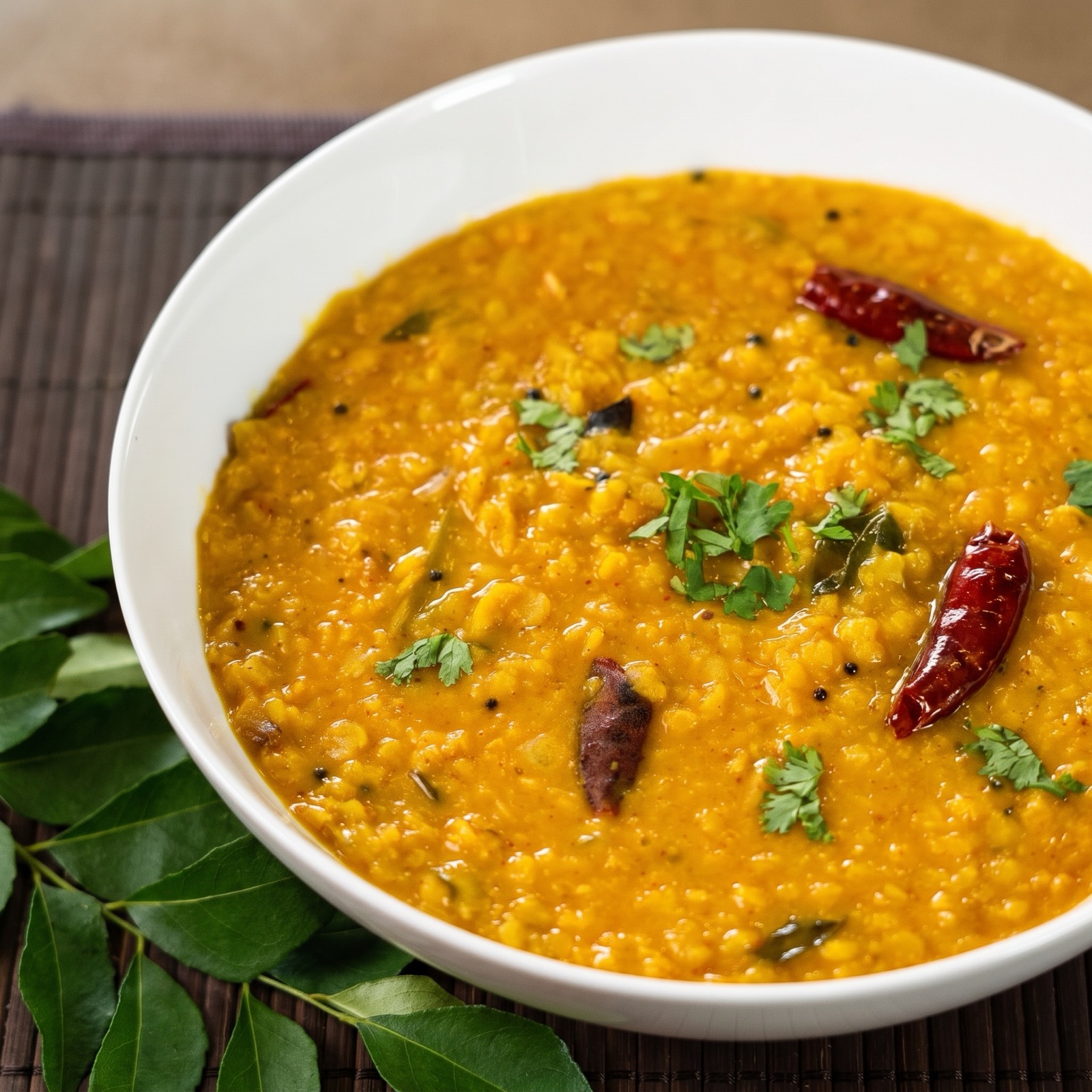
If pol sambol is the sidekick, parippu — dhal curry — is the everyday hero. Almost every Sri Lankan household cooks it, and everyone's version is slightly different. This one leans creamy and mild, with a two-stage method: first the lentils simmer soft with turmeric and coconut milk, then a separate thel dala (tempering) of aromatics is fried in oil and stirred through at the end. That final sizzle is what lifts it from good to unforgettable.
Red lentils (masoor dhal) are ideal because they cook quickly and turn silky. No soaking needed.
Ingredients
- 1 cup red lentils (masoor dhal), rinsed well
- 2.5 cups water
- 1/2 tsp ground turmeric
- 1 sprig curry leaves
- 1 piece pandan leaf (rampe), optional
- 1 green chilli, slit
- 200ml coconut milk (half a tin)
- 1 tsp salt, to taste
For the tempering (thel dala)
- 2 tbsp coconut or vegetable oil
- 1 small onion, finely sliced
- 3 garlic cloves, sliced
- 1 sprig curry leaves
- 1/2 tsp black mustard seeds
- 2 dried red chillies, broken
- 1/4 tsp chilli flakes, optional
Method
- Put the rinsed lentils, water, turmeric, curry leaves, pandan and green chilli in a saucepan. Bring to a boil, then lower the heat and simmer, partially covered, for 15 minutes. Skim off any froth and stir now and then so the lentils don't catch.
- When the lentils are soft and starting to break down, stir in the coconut milk and salt. Simmer gently for another 5 minutes until creamy. Add a splash of water if it gets too thick. Take off the heat.
- Make the tempering: heat the oil in a small frying pan over medium heat. Add the mustard seeds and let them pop, then add the onion, garlic, curry leaves and dried chillies. Fry for 4–5 minutes until the onion is golden and everything smells fragrant.
- Pour the sizzling tempering — oil and all — over the dhal and stir it through. Cover for a minute to let the flavour settle.
- Taste for salt and serve warm with rice or bread.
Cook's notes
- Rinse the lentils until the water runs clear — it keeps the dhal from turning gluey.
- Don't skip the tempering. Frying the aromatics separately and adding them at the end is the whole point of parippu.
- For a richer curry, use more of the thick top layer of the coconut milk tin at step 2.
Good to know