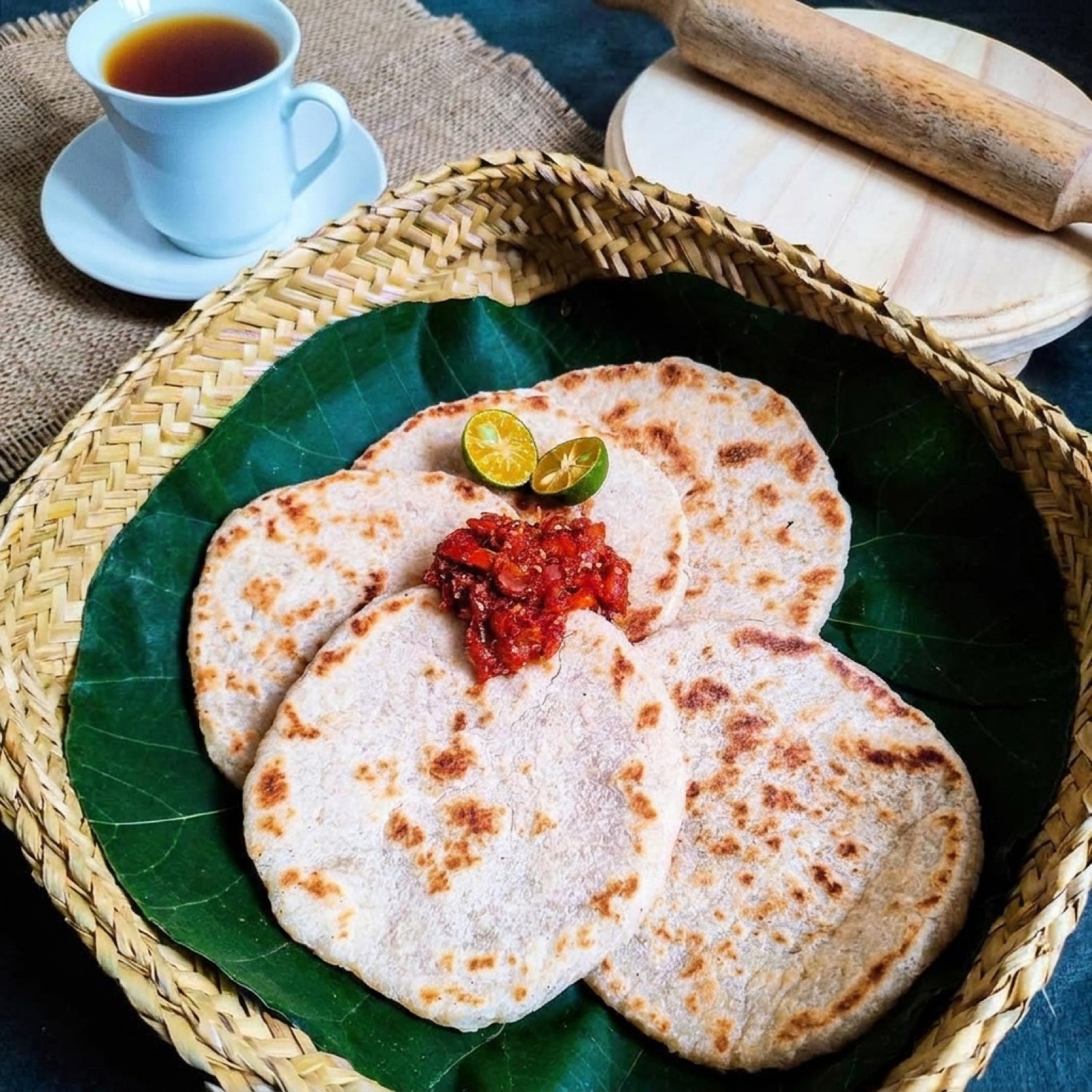
Pol roti — coconut roti — is the workhorse bread of Sri Lankan home kitchens. It's a simple, sturdy flatbread made from flour and freshly grated coconut, brought together with a little water and cooked on a hot pan until golden and flecked. It's chewier and more substantial than a chapati, and the coconut gives it richness and a faint sweetness. Sri Lankans eat it for breakfast or dinner with lunu miris (chilli-onion sambol), pol sambol, seeni sambol or any curry.
There's no yeast and no resting required, so it comes together fast. The dough should be soft but not sticky, and the pan needs to be properly hot so the roti cooks through with good brown spots rather than drying out.
Ingredients
- 2 cups plain flour, plus extra for dusting
- 1 1/2 cups freshly grated coconut (or desiccated coconut, rehydrated)
- 1 small onion, finely chopped, optional
- 1 green chilli, finely chopped, optional
- 3/4 tsp salt
- About 3/4 cup water, as needed
- 1 tbsp oil, plus more for cooking
Method
- In a large bowl, mix the flour, grated coconut, salt and, if using, the onion and green chilli.
- Add the oil, then pour in the water a little at a time, mixing and bringing the dough together. Knead briefly into a soft, non-sticky dough — add flour if too wet, water if too dry.
- Divide into 4–6 equal balls. On a lightly floured surface, flatten each ball with your palms or a rolling pin into a disc about 1cm thick.
- Heat a flat pan or griddle over medium-high heat. Lightly oil it.
- Cook each roti for 2–3 minutes per side, pressing gently, until golden-brown spots appear and the roti is cooked through. Add a little oil at the edges for a crisper finish.
- Keep the cooked rotis wrapped in a clean cloth to stay soft. Serve warm with lunu miris, sambol or curry.
Cook's notes
- Fresh grated coconut gives the best texture and flavour; if using desiccated, rehydrate it in warm water first.
- Keep the dough soft — a stiff dough makes dense, dry roti.
- Don't roll too thin; pol roti is meant to be hearty and a little chewy.
Good to know